Thursday, May 18, 2023

Everyday Dedication


 https://www.amazon.ca/Sleuthing-Klondike-Canadian-Historical-Mysteries-ebook/dp/B0C18F5D72

I am a Canadian and all my mystery, historical, romance, and young adult novels are set in Canada. Canada (like many countries) has national holidays that are sanctioned by the government and are devoted to famous persons or events. There is usually one a month and most workers have the day off to celebrate it. However, it is a little known fact that each day of the year is dedicated to some animal, or food, or activity. None of them is a recognized holiday but they are worth acknowledging. Here are some for the last part of May.

May 19—National Devil’s Food Cake Day. I love chocolate cake so will be going shopping later.

May 20—Pick Strawberries Day.

May 21—National Waiters and Waitresses Day.

May 22—Victoria Day. This is celebrated in Canada to commemorate Queen Victoria, May 24, 1819 – January 22, 1901. She reigned from June 20, 1837 until her death. At 63 years 216 days she was the longest reigning monarch until Queen Elizabeth II who was on the throne from February 6, 1952 until her death in September 8, 2022.

May 23—Lucky Penny Day. Since Canada doesn’t have pennies anymore I think it should be changed to lucky nickel day.

May 24—National Scavenger Hunt Day.

May 25—Towel Day. Not sure what you are supposed to do with the towel.

May 26-- Sally Ride Day

May 27—National Hugging Day

May 28—Hamburger Day. My hubby is going to like that.

May 29—Memorial Day. It is celebrated in the United States to mourn and honour the country’s military personnel who died while serving in the armed forces.

May 30—Water a Flower Day. They will like it in this heat we are having.

May 31--National Macaroon Day.


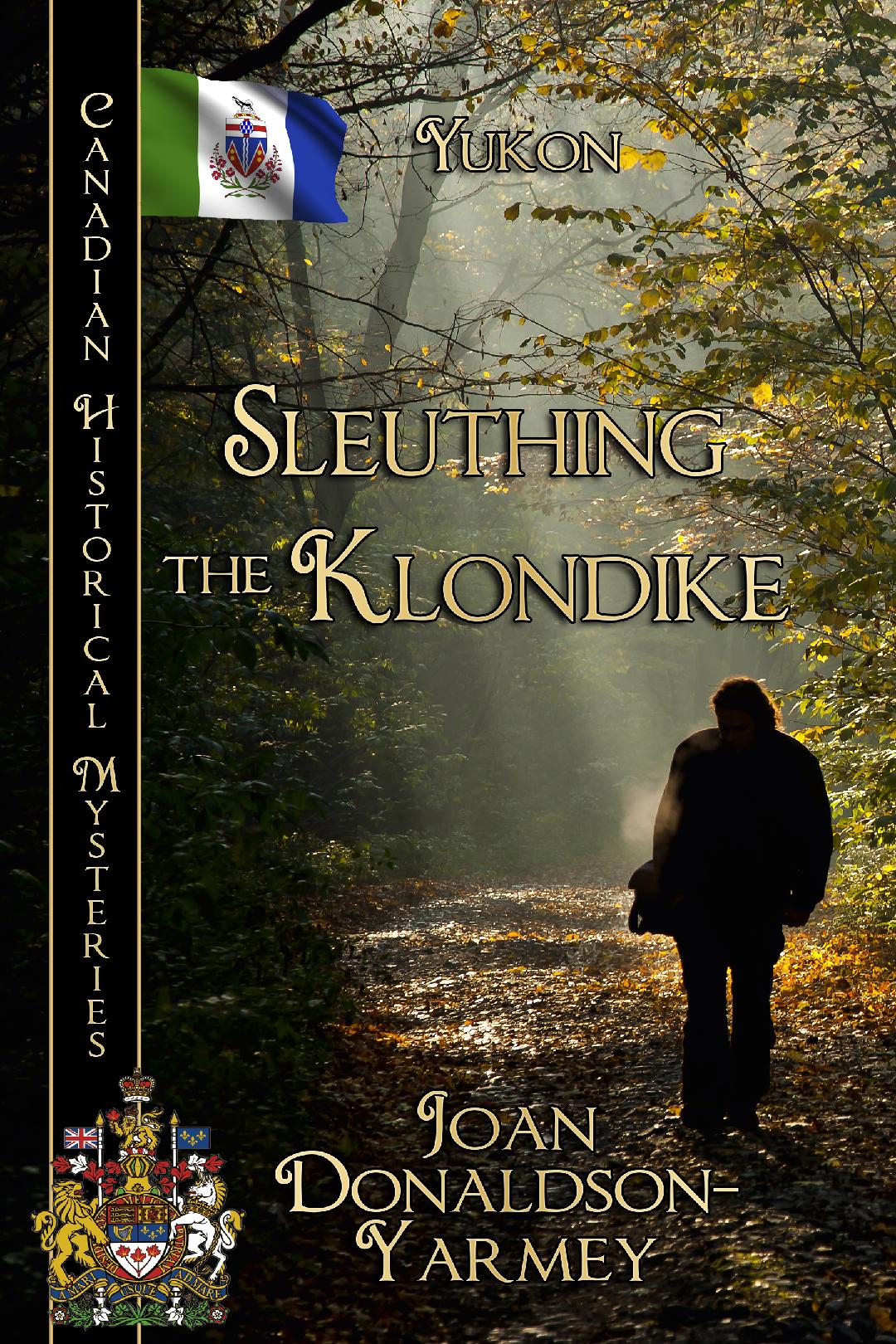
I have written three books in what I call Joan’s Historical Yukon Novels: Romancing the Klondike (Historical romance), Rushing the Klondike (sequel to Romancing the Klondike), and Sleuthing the Klondike (historical mystery). All are set during the Klondike Gold Rush 1896-1898. Here is the link to my author’s page at BWL Publishing, Inc. to find these books or any of my other mystery, romance, and historical novels.

https://www.bookswelove.com/donaldson-yarmey-joan/

https://www.amazon.ca/Sleuthing-Klondike-Canadian-Historical-Mysteries-ebook/dp/B0C18F5D72


Friday, April 21, 2023

Writing Historical Novels


https://www.bookswelove.com/donaldson-yarmey-joan/

https://books2read.com/Romancing-the-Klondike

https://books2read.com/Rushing-the-Klondike

https://www.bookswelove.com/authors/canadian-historical-mysteries/ 

As a historical writer it is important to make sure that you use the words of the period you have set your book in. For example if your story is set in the 1500s you could use the word hugger-mugger when talking about a sneaky person who is acting in a secretive way and elflocks to describe messy hair. Jargoyles meant that a person was puzzled about something in the 1600s while in the 1700s a person who was out of sorts was grumpish. In the 1800s people would have felt curglaff when they jumped into cold water and a man going for a post dinner walk while smoking his pipe was lunting. In the early 1900s a person who was drunk was referred to as being fuzzled.

Of course, it is important when using those words that the writer somehow explains what they mean such as, if a man said he was going for an after lunch lunt, the person he was talking to could reply. “I don’t have my pipe and tobacco with me today.” I feel that writers who use terminology from a different era or words or phrases from a different language without clarification are trying to impress the reader with their vocabulary and intellect. Speaking as a reader, for me what they are really doing is making me angry and interrupting the flow of the story. I am jolted out of the lives of the characters and into my life as I try to process the meaning of what was written.

As a writer you want the reader to be so caught up in the story that they don’t want to put the book down, you don’t want them to throw the book across the room because they don’t understand what has been said or done.

Another important aspect of writing historical novels or even novels set in past decades is to make sure that you do have the characters using devices that hadn’t been invented yet.

The ball point pen came into use in the 1940’s so you can’t have someone signing papers with it in the 1920s. The Charleston dance was introduced in a movie in 1923 and caught on after that, so a story set before that time could not have party-goers dancing it. While the computer was invented during World War II, it didn’t come into commercial use until the 1950/60s and personal use until the 1970/80s. Don’t have a person make a phone call before March 7, 1876, which is when Alexander Graham Bell patented his telephone and don’t have someone send a text on a mobile phone in the 1970s.

It is important to do your research when writing a novel set in the past, no matter what the year.

More historical words:

In the 1590s beef-witted described something as being brainless or stupid.

In the 1640s callipygian described a beautifully shaped butt.

In the 1650s sluberdegullion meant an unkempt, drooling person.

In the 1950s two people making out in the back seat of a car were doing the back seat bingo.

Sunday, March 5, 2023

Sable Island


 https://www.amazon.ca/Killer-Match-Joan-Donaldson-Yarmey/dp/1990086241

https://www.facebook.com/writingsbyJoan

Sable Island

I am a Canadian writer and all my mystery, historical, romance, and young adult novels are set in Canada. According to Statistics Canada, Canada has 52,455 islands and ranks fourth in the world for number of island. However, it is a long ways behind Sweden that has 267,570 islands, Norway with its 239,057 islands, and Finland with 178,947.

Canada has three of the top ten largest islands in the world and all are in the northern territory of Nunavut. Baffin is Canada’s largest island at 507,451 sq km (195,928 sq mi) and the world’s fifth largest. Victoria comes in second in Canada at 217,291 sq km (83,897 sq mi) It is the world’s eighth largest. Ellesmere is third in Canada and tenth in the world at 196,236 sq km (75,767 sq mi). It is slightly smaller than Great Britain.

Canada also has the world’s largest fresh water island. Manitoulin Island is located within the boundaries of the province of Ontario on Lake Huron, one of the Five Great Lakes. The island is so large that it has over one hundred lakes on it.

One of the most famous Canadian islands is the crescent-shaped Sable Island, off the southeast coast of the province of Nova Scotia. It is believed to have been discovered by Portuguese explorer Joao Alvares Fagundes in 1520-1521. In 1598 a French nobleman, Troilus de la Roche de Mesgouz, tried to colonize the new world with convicts but they mutinied and, in punishment were put on the tree-less, stone-less Sable Island. A few managed to survive in mud huts until 1603, when they were returned to France.

Sable Island has over 350 bird species and 190 different plants but it is best known for its feral horses. The ancestors of the present day horses were ceased by the British from the Acadians, who were a French-speaking group who settled in the New France colony of Arcadia. They were expelled between 1755 and 1764 after the English took over the colony. Their horses were purchased and some were taken to Sable Island in 1760 for grazing.

The Sable Island horses number between 400 and 550 and due to limited food supply on the island are small and stocky in stature. Although, in the past, some of them were rounded up and taken to Nova Scotia for sale, today they are unmanaged and left to live their lives as wild animals.

In 2008 the Sable Island Horse became the official horse of Nova Scotia and in 2011, the Sable Island National park reserve was created to protect the horses and the island.

Friday, January 20, 2023

Canada's Coastline

https://books2read.com/Rushing-the-Klondike

https://www.bookswelove.com/donaldson-yarmey-joan/
 

Canada’s Coastline

I am a Canadian and all my mystery, historical, romance, and young adult novels are set in Canada. Canada is the second largest country in the world and has the world’s longest coastline. It is 243,792 km (151,485.326 mi in length and borders on the North Pacific, Arctic, and North Atlantic Oceans and includes the coasts of Newfoundland, Prince Edward Island, and Cape Breton island, as well as, thousands of off-shore islands. The next closest country is Indonesia with 54,716 km (33,999 mi). The sovereign country of Monaco has 5.6 km (3.5 mi) of coastline.

Part of Canada’s coastline encompasses Hudson Bay which, even though it is saltwater, is sometimes considered a marginal sea of the Arctic Ocean. While politically it is considered part of Nunavut, it borders on Ontario, Manitoba, Quebec, and Nunavut. Hudson Bay is famous for the fur trade between Europeans and Indigenous peoples from the 1600s to the 1900s.

Canada has ten provinces and three territories. Two of the provinces, Alberta and Saskatchewan, are land locked. The others plus the territories all have some part of their coast on saltwater. The province of British Columbia has the most with 25,725 km (15,985 mi) on the Pacific Ocean, while the Yukon Territory has only 343 km (213 mi) along the Arctic Ocean.

The government of Canada has set aside five key ecosystems of Canada’s coastline as Large Ocean Management Areas (LOMA) for conservation, planning, and management. The Pacific North Coast comprises one-quarter of the Canadian Pacific ocean waters. This area is home to sea lions, dolphins, seals, porpoises, and twenty-seven different whale species. It is also the habitat of 80% of the global population of Cassin’s Auklet plus a number of other seabirds. The glass sponge reef along the coast dates back 9,000 years.

The people around the Eastern Scotian shelf rely on fishing and petroleum exploration for their livelihood to the detriment of the region and the number of marine animals that live there. LOMA is trying to improve the area. Although, shore around the Placentia Bay area off the coast of Newfound and Labrador  is degrading due to economic development, it is still the habitat for 49 bird species, 14 marine animal species, and 23 fish species. There are also a number of plant species.

The Beaufort Sea is a marginal sea (a division of water separated from an ocean by islands, peninsulas, or archipelagos) in the Arctic Ocean off the shore of the Yukon and Northwest Territories. This LOMA is a complex a marine system because of the short summer free of ice, the freshwater flowing into the sea during the spring and summer and the increased dropping of sediment. It has been an important area for humans who have hunted and fished for centuries. Six communities oversea the management of the LOMA and by doing so are able to pass on their harvesting skills to future generations.

The fifth LOMA protected area is the Gulf of St Lawrence which sits at the mouth of the St Lawrence River and covers 155,000 sq km (60,000 sq mi). Some of the species that inhabit the waters are Greenland shark, the St. Lawrence beluga, giant whales, seals, tiny pink crustaceans called krill that are near the bottom of the food chain, sea ducks, and geese. It is a very productive and diverse estuary along the coasts of Quebec, New Brunswick, Prince Edward Island, Nova Scotia, and Newfound land and Labrador.

Canadian Lakes


 https://books2read.com/Romancing-the-Klondike

https://www.bookswelove.com/donaldson-yarmey-joan/

Canadian Lakes

 I am a Canadian and all my mystery, historical, romance, and young adult novels are set in Canada. Canada is the second largest country in the world and has about 20% of the world’s freshwater. It also shares the world’s largest body of freshwater-the Great Lakes-with the United States. Lake Superior, Lake Huron, Lake Erie, Lake Ontario, are divided by the border while Lake Michigan is totally in the United States.

Nearly 14% of the world’s lakes over 500 sq km (193.05 sq mi) are within Canada’s borders. The largest lake totally within the country is Great Bear Lake in the Northwest Territories. It is the 4th largest in North America and the 9th largest in the world. The name comes from the Chipewyan word satudene which means ‘grizzly bear water people’.

Great Slave Lake, also in the Northwest Territories is the second largest freshwater lake in Canada and the 10th largest on the Earth. With a depth of 614 metres (2,014 ft) it is the deepest lake in North America. It was named for the Dene, the first nation’s people who were called Slavey by the Cree first nations.

Lake Winnipeg, in Manitoba, is Canada’s third largest freshwater lake and has the largest watershed (the rivers that drain into a lake plus all the land with streams that drain into those rivers) in Canada. Its watershed is about 982,900 square kilometres (379,500 square miles) which is about 40 times its size. This ratio is the biggest of any other large lake in the world. Waters flow into Lake Winnipeg from the provinces of Alberta, Saskatchewan, Manitoba and Ontario and from the states of North Dakota, South Dakota, Minnesota, and Montana making it the 11th largest freshwater lake in the world.

Lake Athabasca sits on the northern border of the provinces of Alberta and Saskatchewan with 26% in Alberta and 74% in Saskatchewan. It is the fourth largest lake totally in Canada and waters from it flow northward through the Slave and Mackenzie river systems to the Arctic Ocean.

It is estimated that there are about 2 million lakes of various sizes in Canada and they make up about 9% of the country’s mass. This means that 891,163 square kilometres (344,080 sq mi) of Canada’s total area of 9.985 million square kilometres (3.8 million sq mi) is covered by freshwater.