Thursday, June 25, 2026
My Fourth Klondike Novel
Monday, May 25, 2026
Struggles with the Setting in My Novels
https://www.bookswelove.com/shop/p/romancing-the-klondike
https://books2read.com/Romancing-the-Klondike
https://www.amazon.ca/Romancing-Klondike-Yukon-Joan-Donaldson-Yarmey/dp/1772992682
https://books2read.com/Rushing-the-Klondike
https://www.amazon.ca/Rushing-Klondike-Joan-Donaldson-Yarmey/dp/0228622328
https://www.bookswelove.com/shop/p/sleuthing-the-klondike
https://books2read.com/Sleuthing-the-Klondike
https://www.amazon.ca/gp/product/0228624762?tag=books2read02-20
I have written in many different genres, non-fiction, mystery, romance,
and historical. According to the professionals, I have to make sure my
characters are multi-dimensional, my story plot is fast paced, and my setting
is exciting. Readers want to identify with the main characters so they have to
be believable and likeable. Readers want action in the story so the plot has to
move along at a good clip. And readers want to learn about the place where the
story is set, so it is important that I know the setting itself.
For my Travelling Detective Series, I had been to each of the places in
the story and knew my setting. My descriptions of a town or a building or a street
were true because I had seen them. I’ve heard of some authors who write about
a place they’ve never been to by using Google Maps to check out the buildings
or streets.
However, this is much harder in historical novels because that setting
is no longer readily available in the way it was in the time period. Research
is important and this is where non-fiction books, museums, archives, and
paintings or photos of that time come in handy. And, of course, the Internet.
It is the easiest and quickest way to learn about a historical event or a place
or what clothing was worn, and even people’s names at the time.
I have written seven Canadian historical novels in two different sets.
My Young Adult Canadian Historical books are: West to the Bay, West to Grande
Portage, and West to Fort Edmonton. For each one I spent as much time
researching the areas, the history, and the people at the time as I did
writing the story since I hadn’t been to the Hudson’s Bay or Montreal or
Edmonton in the mid-1700s to early 1800s, I hadn't paddled a canoe or York boat, nor had I taken part in trading furs.
Luckily, for my Yukon books set during the Klondike Gold Rush, I’ve been
to Dawson City three times and even hiked the Chilkoot trail on the hundredth
anniversary of the gold rush. Many of the buildings in Dawson today are still from
that era. However, I still had to research the clothing, the founding of Dawson
City, the people who headed north, and what life was like for the newcomers
from 1896 to 1898.
I enjoy research so much, that sometimes I go down the rabbit hole and my actual writing suffers.
Romancing the Klondike is one of the twelve books of BWL Publishing, Inc. Canadian Historical Brides Collection.
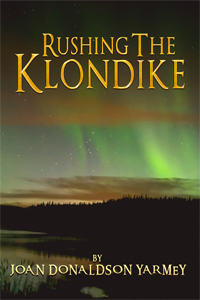
Rushing the Klondike is my sequel to that book.
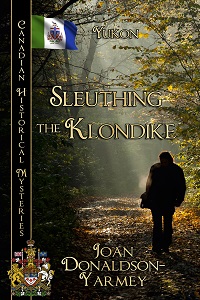
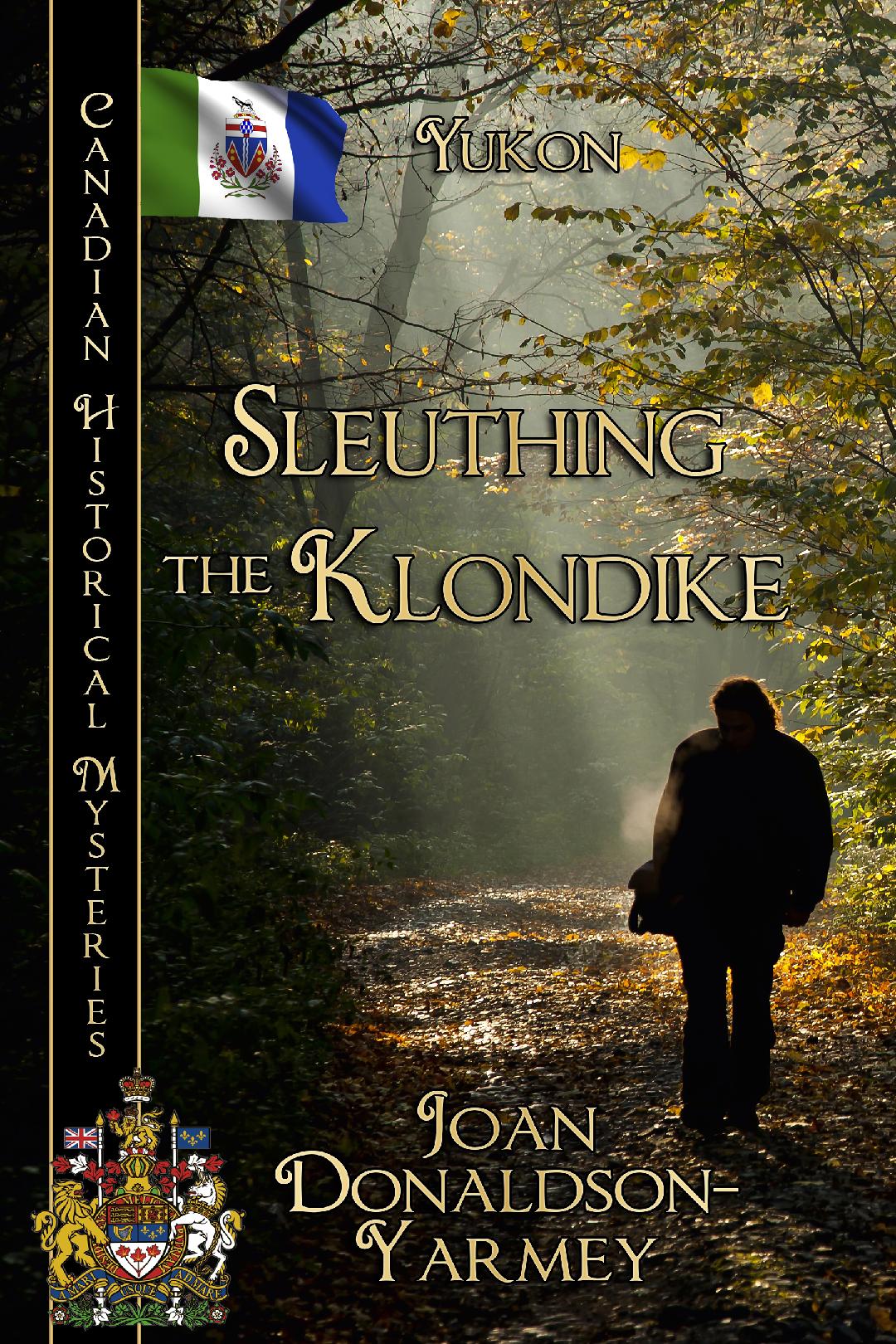
Sleuthing the Klondike is one of the twelve books of BWL Publishing Inc,
Canadian Historical Mystery Collection.
Haunting the Klondike is one of BWL Publishing Inc. Paranormal Canadiana Paranormal Collection and will be out in June, 2026
Monday, May 26, 2025
Vikings in North America
The Vikings in North America
It has been long thought that the first European to step on the soil of North America was Christopher Columbus. But excavations done at a site in northwest Newfoundland, called L’Anse aux Meadows, in the 1960’s recovered artifacts like jewellery, a stone oil lamp, a bone knitting needle, and tools that were compared to ones used at Viking settlements in Greenland and Iceland around the year 1000. They have been carbon dated to between the years 990 and 1050, proof that the Vikings were in North America long before Columbus.
Vikings were people from Scandinavia, present day Norway, Denmark, and Sweden, who were merchants as well as warriors. During the late eighth to eleventh century they raided, pillage, and conquered settlements in Scotland and throughout Europe. They also had settlements in Iceland and Greenland.
Surnames ending in "-son" or "-sen" are considered to have Viking ancestry. My great-grandparents emigrated from Scotland. Plus, the little finger on my right hand does not lay flat when I set my palm down. My sister has the same condition but worse. Her little finger had a permanent bend to it. She went to her doctor and received a botox shot to relax it. When she went for physio she was told that a bent finger like that was a sign of being a Viking. I also have a friend of Norwegian ancestry with the same little finger.
But, that bent little finger comes from my mother’s side who also had one. Her maiden name was Relf, which I learned was first found in the 1000s in Nairnit, a town in northern Scotland. So, with this ancestry on both sides I consider myself a Viking. In 2017, I visited L’Anse aux Meadows in northwest Newfloundland.
From the parking lot I walked to the interpretive centre where I looked at the displays of what the settlement would have looked like during its occupation. There are replicas of the longships that the Vikings sailed in, artifacts unearthed during the excavations, write-ups about the Vikings, tools that were found, and maps showing the route the Vikings used to get to Newfoundland or Vinland, as they are thought to have named it. The Scandinavians of the medieval period were known as Norse and they were farmers and traders. When they began raiding other countries they became known as Vikings, the Norse word for raiders.
There has been a lot of interest in the Vikings recently with televisions shows and documentaries about them and their raiding which began in the 790s and lasted until around 1050. With their longboats and advanced sailing and navigational skills the Viking men and women travelled from Scandinavia south through Europe to Africa, the Middle East, and Asia and west to North America.
I left the centre and followed a long, wooden boardwalk through grass and small bushes to the actual site. There I found a post fence around a yard with large mounds covered in grass. When the Vikings landed here there were forests from which they were able to get material for their boat and house building. The remains of eight buildings were found in the 1960s and they are believed to have been made of a wooden frame and covered with sod.
The structures have been identified are a long house, an iron smithy, a carpentry shop, and smaller buildings that may have been for lower-status crewmembers or even slaves or for storage. There are three replicas of those sod buildings with their thick walls on the site. One is a long house which is equipped with clothes, beds and bedding, household utensils, tools, a fire pit and has a couple dressed in period clothing cooking a meal. The Vikings hunted caribou, bear, and smaller animals plus whale, walrus, and birds for food as well as fished.
I wandered through the rooms divided by hand carved wooden plank walls. Light came from the fire and holes in the ceiling which are partially covered with upside down wooden boxes to keep the rain out.
One of the other buildings is the smithy complete with anvil, forge, bellows, and various tools. I wandered the rest of the site and saw the outlines of other buildings that have not been reconstructed. It is estimated that between 30 and 160 people lived there over the years.
The Vikings arrived in Newfoundland from Iceland via Greenland. According to historical records the site was inhabited by the brothers and sister of Leif Ericson plus a series of explorers. It is believed the settlement was there for seven or eight years before being abandoned. This is the only confirmed Viking site in North America and is the farthest west that Europeans sailed before Columbus.
After viewing the buildings I followed a trail along the rocky shoreline and then turned inland to walk on a boardwalk over a bog back to the parking lot.
One of the best things is that not only does the interpretive centre have the history of the Vikings, but there is also extensive displays showing the history of the aboriginal people who inhabited the area over thousands of years before any European arrived.
In 2018 I visited the Viking Ship Museum in Roskilde, just outside Copenhagen, Denmark. In the museum is a permanent exhibition of parts of five original Viking ships excavated nearby in 1962. A thousand years ago these ships were deliberately scuttled (filled with rocks and sunk) in a river to stop the enemy from invading the city by water. Over the decades since they were found, the pieces have been preserved and put together on a metal frame to show how the ships would have looked. Also at the site are replicas of the Viking ships and I became a Viking for an hour. A group of us sat on the seats and rowed the ship out of the harbour using the long oars. Once on the open water we hoisted the mast and set sail. After sailing for a while we headed back to the harbour. As we neared it I had the honour of pulling on the rope that lowered the mast and sail and we glided back to our dock.
It would be fun, someday, to write a novel about my ancestors.
Thursday, July 25, 2024
Canadian Authors-New Brunswick
https://books2read.com/Romancing-the-Klondike
https://books2read.com/Rushing-the-Klondike
https://books2read.com/Sleuthing-the-Klondike
https://bwlpublishing.ca/donaldson-yarmey-joan/
I am a proud Canadian author of over twenty fiction and non-fiction books in my long writing career. But I am just one of thousands of published writers from this huge country. Canada has had a long and illustrious history of producing world renown authors and books going all the way back to the 18th century.
Frances Moore was born in England in 1724. She was a well-known poet and playwright in England before she and her husband, Reverend John Brooke moved to Quebec City in 1763, for John to take up the post of army chaplain. During her time there Frances wrote The History of Emily Montague, a love story set in the newly formed Quebec province.
The story is told through the voices of her characters by way of personal letters between the two. This is known as epistolary (of letters) type of writing and it was popular during the1700s in Europe. The Brookes’ returned to England in 1768 and the novel was published in 1769 the London bookseller, James Dodsley. The History of Emily Montague was the first novel written in what is now Canada and the first with a Canadian setting. Frances died in 1789.
New Brunswick
Julia Catherine Beckwith was born on March 10, 1796 in Fredericton, New Brunswick. Her mother, Julie-Louise Le Brun, was from a wealthy French family that had immigrated to Canada in the 17th and 18th centuries. Her father, Nehemiah Beckwith, moved from New England in 1780 and owned a successful ship building business. Julie-Louise had given up her Roman Catholic faith when she married, but Julia spent a lot of her early life visiting her French cousins in Nova Scotia and Quebec. One of her cousins became a nun of the Hotel-Dieu in Montreal.
Her mother’s previous religious background was the source of the idea for her first novel St. Ursula’s convent, or the nun of Canada. She wrote it in Fredericton when she was seventeen and it had complicated plots, romance, suspense, and heroic adventures. It was not to be published for almost ten years.
In 1820, in order to lessen the burden on her mother after her father’s death by drowning, Julia moved in with her aunt in Kingston, Upper Canada (now Ontario). She married George Henry Hart on January 3, 1822. George was a bookbinder and Julia operated a boarding house for girls. Her novel was published in 1824 by Hugh C. Thomson as St. Ursula’s Convent or, The Nun of Canada; Containing Scenes from Real Life. According to Beckwith’s wishes, the author was listed as anonymous. It was the first work of fiction written by any man or woman who had been born in Canada and the first to be published in what is now Canada. Julia Beckwith is considered Canada’s first novelist.
Julia and her husband moved to Rochester, NY, in 1824 where her second novel, Tonnewonte; or, the adopted son of America, was published and portrayed as having been written by an American. It, too, had suspense and depth of feeling, but as some critics said it had the same stilted expression and moral overtones as her first novel. Besides entertainment value, Julia wrote to express attitudes toward society.
By 1831 Julia and George had six children and they moved back to Fredericton. There she contributed to the weekly paper, the New Brunswick Reporter. She also wrote her third book Edith (or The Doom), which was never published.
Julia Catherine Beckwith died in Fredericton, New Brunswick on November 28, 1867, the age of 71.
Raymond Fraser was born on May 8, 1941 in Chatham (now Miramichi), New Brunswick, the youngest of three children. His older sisters left home and his mother died when he as a teenager. He spent a lot of his alone time reading. He attended St. Thomas University in Fredericton. There he played sports in his freshman year and was co-editor of the student literary magazine Tom-Tom in his junior year.
He worked as a teacher for a year then moved to Montreal in 1965 where he and poet Leroy Johnson created the literary magazine Intercourse: Contemporary Canadian Writing (1966-1971). He was also one of the founders of the Montreal Story Tellers Fiction Performance Group, which put on readings in local high schools. To earn money while writing he worked as an editor, chief staff writer, and a freelance writer for the tabloid newspapers. Fraser’s first book of short stories, The Black Horse Tavern, was published in 1973.
Raymond Fraser and his wife, Sharon, travelled through Europe during the 1970s. The Struggle Outside came out in 1975 and The Bonnonbridge Musicians in 1978. The Bonnonbridge Musicians was a finalist for the 1978 Governor General Literary Award for Fiction. He finally settled in Fredericton and began writing full time. He also was the Writer-In-Residence at the Fredericton High School.
Raymond Fraser wrote a total of eight books of poetry and fourteen novels and short story collections, five of which were listed in Atlantic Canada’s 100 Greatest Books (2009). He also received the first Lieutenant-Governor’s Award for High Achievement in the Arts that year. He became a member of the Order of New Brunswick in 2012 and received an honorary Doctor of Letters degree from St. Thomas University in 2016.
Fraser died in Fredericton on October 22, 2018, at the age of 77 from cancer.
Wednesday, January 24, 2024
Are There Rules for Writing
https://books2read.com/Sleuthing-the-Klondike
https://bwlpublishing.ca/donaldson-yarmey-joan/
Are There Rules to Writing?
Some new writers believe there is a formula for writing, that something should happen by a certain page in the manuscript and another thing so many pages further. In some genres, like romance, that may be the case but for most it isn’t. And even some of those who write romance say they just present the story. For mystery stories, some believe it should start out with the murder, or disappearance, or some sort of mysterious or secretive action while others begin their story with the characters and setting. And remember there are all sorts of sub-genres with every genre and for each one of them the story can be started according to the author’s taste.
So, if there are no rules for writing are there rules for being a writer? Maybe. It depends on who you listen to. Some writers follow a set pattern of writing, such as outlining, using a certain software, or doing their first draft with pen and paper. But there are more dimensions to writing other than putting words on paper.
Don’t try to write like a famous author you admire. You have your own way of writing that is your style and voice. Stay with it.
Before a manuscript is sent to an editor, agent, publisher, or beta reader, it should be free of mistakes in spelling, punctuation, and in the story line—make sure there is no change to a character’s hair colour or what a character did when in the story. Don’t have a character talk about something before they’ve even experience it or witnessed it.
Once their manuscript is complete some writers look for beta readers to give them feedback on the story. It is important to remember that not everyone will like the same story. Even famous writers can’t please their readers all of the time. So don’t be angry or hurt if someone doesn’t like yours. Take what they have to say about your manuscript and see if it needs changing. Bottom line, though, is that it is your work so your opinion comes first. And to add further, there are a lot of people who will resent your success. Ignore their cutting remarks.
Don’t sit back after you’ve sent your manuscript away. Start your next book, compose a short story, keep writing. And if you find that the writing of a story isn’t going well, feel free to set the manuscript aside and start another. You can pick the first one up again at a later time.
And after having said all that, here are some of my quirks about my writing. I have a set way of developing the story before I start to write it depending of the genre. If it’s historical I will do a lot of research to get to know the era, the clothing, the hairdos, etc, before starting and continue researching as the story advances to make sure I get all the facts right. If it’s a mystery then I decide on the death or disappearance then add the characters and let them tell the story. A lot of the time I don’t know who did it until part way through or even at the end of the manuscript. If it’s a romance, then I start with the characters and the setting and see what happens.
I say that I am a pantser writer in that I don’t use an outline but once the story progresses then I will plot out scenes that will be coming next so I do a bit of outlining.
Bottom line about writing: do what works best for you and ignore the rest.
Friday, September 22, 2023
Pantser Writing
https://books2read.com/Romancing-the-Klondike
https://books2read.com/Rushing-the-Klondike
Pantser Writing
If I had to chose between being called a plotter or a pantser writer I am definitely a pantser. I have never worked with a solid outline or arc for my novels, whether they are mystery, historical, romance, or young adult. And this is mainly because I find that my characters seldom end up the way I first pictured them and the plot never takes the route I thought it would.
I either start with an idea or a character and decide the setting and then start writing. I do begin the story with a character in his/her everyday life so the reader can get to know them then I put in the trigger that is out of the control of my main character or starts the mystery. This puts the main character on his/her quest for a solution.
Tuesday, September 5, 2023
National Holidays
https://www.amazon.com/Sleuthing-Klondike-Canadian-Historical-Mysteries-ebook/dp/B0C18F5D72/ref=sr_1_1?qid=1685272048&refinements=p_27%3AJoan+Donaldson-Yarmey&s=books&sr=1-1#customerReviews
Friday, July 21, 2023
My Historical Yukon Novels
https://books2read.com/Sleuthing-the-Klondike
https://books2read.com/Rushing-the-Klondike
https://books2read.com/Romancing-the-Klondike
BWL Publishing Inc. published twelve books of the Canadian Historical Brides Collection in 2017, Canada's 150th birthday. Each book was set in one of the ten provinces or two territories (Northwest Territories and Nunavut were combined). Because I had travelled to the Yukon twice and had hiked the Chilkoot Trail on the hundredth anniversary of the Klondike Gold Rush in 1997, I chose the Yukon of 1896/97 to write about. My novel, Romancing the Klondike, was published as a hard copy and ebook in 2017 with an audible version being released in 2022. It follows the lives of two young women who travel from Halifax to Fortymile on the Yukon River in 1896.
Pearl Owens is commissioned to write articles about the north for her hometown newspaper. She is accompanied by her cousin, Emma, and they plan on meeting up with Emma’s brother who has been in the north with two friends for five years. Gold is discovered on Rabbit Creek just as they arrive. Emma marries one of Sam’s friends and returns to Halifax while Pearl remains in the newly established Dawson.
I wrote a sequel to that book, Rushing the Klondike which was published in October of 2022. Although it is not part of the Canadian Historical Brides Collection, it is a continuation of the original Romancing the Klondike story.
This year BWL, Inc has begun releasing the Canadian Historical Mysteries Collection, which includes twelve mystery novels set in each of the Canadian provinces and territories. My novel, Sleuthing the Klondike, was published in April, 2023 and also takes place in the summer of 1898. Helen Castrel arrives in Victoria, B.C after a long journey from London, England and hires Detective Baxter Davenport to go with her to Dawson City to find her brother. David Castrel is a remittance man who hasn’t been heard from for a year. While the main characters are different from my other two books, their lives become intertwined with the characters of the first Klondike books during their investigation.
The territory of The Yukon was founded on gold mining, but there has been coal and silver mining in the territory also. It is now a favourite destination for tourists.
Monday, May 22, 2023
From Big To Little
https://www.bookswelove.com/donaldson-yarmey-joan/
https://books2read.com/Romancing-the-Klondike
https://books2read.com/Rushing-the-Klondike
https://www.bookswelove.com/authors/canadian-historical-mysteries/
I am a Canadian writer and all my mystery, historical, romance, and young adult novels are set in Canada. Canada is the second largest country in the world and home to a wide variety of rocks, plants, and animals. Here are some of the oldest, largest, and smallest examples.
Canada’s largest tree is a western red cedar called the Cheewhat Giant. It is in the Pacific Rim National Park on Vancouver Island. It is 56m (182 ft) tall and has trunk diameter of 6m (20ft). The Cheewhat Giant is also the biggest western red cedar in the world.
Canada’s tallest tree is a Sitka spruce in the Carmanah Valley on Vancouver Island. It stands 95m (312ft) high.
Canada has the oldest exposed bedrock on earth and it is the oldest section of our planet’s early crust. It is known as the Nuvvuagittuq greenstone belt and is in Northern Quebec on the eastern shore of the Hudson Bay. It has been analyzed by geologists and they have determined that the rock samples range from 3.8 to 4.28 billion years old. The earth its 4.6 billion years old and there are very few remnants of its early crust, since most of it has been rotated back into the Earth’s interior by the movement of the large tectonic plates over billions of years.
The Banff Springs Snail isn’t the smallest snail in the world; that is held by the Augustopila psammion species found in a cave in Vietnam and four of them fit inside a grain of sand. However, the only place in the world where the Banff Springs Snail is found is in a handful of thermal springs in Banff National Park in the province of Alberta. The snail was first discovered in 1926 and the largest of the snails are about the size of a small fingernail.
The world’s largest colony of Lesser Snow Geese can be found on the Great Plain of the Koukdjuak on the western side of Baffin Island in the territory of Nunavut, Canada. Beginning in late May as many as two million snow geese migrate there to breed and when the young hatch, they and their parents go further inland to feed. By early September the young are large enough to head south for the winter.
.jpg)

.jpg)