Thursday, June 22, 2023

National Parks and Reserves of Canada


https://books2read.com/u/mKJxdd


 https://books2read.com/u/mYgK6x


National Parks and Reserves of Canada

I am a Canadian writer and all my mystery, historical, romance, and young adult novels are set in Canada. Canada is the second largest country in the world and has forty national parks and ten national park reserves covering an area of approximately 342,000 sq km (132,000 sq mi). This is about 3.2% of Canada’s total land area.

Canada’s first national park, Banff National Park (formerly the Rocky Mountain Park), was created in the province of Alberta in 1885 to protect the land around the Cave and Basin Hot Springs from being developed. Two more parks were created in 1886: Yoho National Park and Glacier National Park, both in the Rocky Mountains in the province of British Columbia. The land for the Waterton National Park, in southern Alberta, was set aside in 1895.

After Waterton it was nine more years before another park was created. The Thousand Islands National Park, which encompasses the one thousand islands of the Islands Parkway on the St. Lawrence River, was established in 1904. These islands are the remnants of former ancient mountains. Then, from 1907, when Jasper National Park was formed, to 2015 when Qausuittug National Park was established on Bathurst Island in Nunavut, forty-four more parks and reserves were created in the ten provinces and three territories. Each park or reserved was formed to protect the habitat of some animal or plant, or for its scenic magnificence. An example is Qautuittug which is the habitat of the endangered Peary Caribou.

One of the features of the parks are red Adirondack chairs. The placing of the red chairs began in Gros Morne National Park in Newfoundland/Labrador in 2011. The members of the park staff positioned eighteen sets of chairs throughout the park and held a contest to see who could find all eighteen sets. The winner won a pair of red chairs. Since then the other parks have followed suit and now there are over two hundred across Canada, all made from 100% recycled plastic.

Some are easily found while others require a bit of a hike. When you find them, sit and enjoy the beautiful view, whether it is overlooking a lake, taking in mountain scenery, enjoying a prairie vista, or listening to a flowing river. The parks offer much to see.

Banff is the most popular park in the country with over four million visitors each year. Tuktut Nogait, in the Northwest Territories, has the least amount of visitors with less than five. A combined total of over fifteen million people view the beautiful scenery of all the parks every year.

Monday, May 22, 2023

From Big To Little


https://www.bookswelove.com/donaldson-yarmey-joan/

https://books2read.com/Romancing-the-Klondike

https://books2read.com/Rushing-the-Klondike

https://www.bookswelove.com/authors/canadian-historical-mysteries/


I am a Canadian writer and all my mystery, historical, romance, and young adult novels are set in Canada. Canada is the second largest country in the world and home to a wide variety of rocks, plants, and animals. Here are some of the oldest, largest, and smallest examples.

Canada’s largest tree is a western red cedar called the Cheewhat Giant. It is in the Pacific Rim National Park on Vancouver Island. It is 56m (182 ft) tall and has trunk diameter of 6m (20ft). The Cheewhat Giant is also the biggest western red cedar in the world.

Canada’s tallest tree is a Sitka spruce in the Carmanah Valley on Vancouver Island. It stands 95m (312ft) high.

Canada has the oldest exposed bedrock on earth and it is the oldest section of our planet’s early crust. It is known as the Nuvvuagittuq greenstone belt and is in Northern Quebec on the eastern shore of the Hudson Bay. It has been analyzed by geologists and they have determined that the rock samples range from 3.8 to 4.28 billion years old. The earth its 4.6 billion years old and there are very few remnants of its early crust, since most of it has been rotated back into the Earth’s interior by the movement of the large tectonic plates over billions of years.

 The Banff Springs Snail isn’t the smallest snail in the world; that is held by the Augustopila psammion species found in a cave in Vietnam and four of them fit inside a grain of sand. However, the only place in the world where the Banff Springs Snail is found is in a handful of thermal springs in Banff National Park in the province of Alberta. The snail was first discovered in 1926 and the largest of the snails are about the size of a small fingernail.

The world’s largest colony of Lesser Snow Geese can be found on the Great Plain of the Koukdjuak on the western side of Baffin Island in the territory of Nunavut, Canada. Beginning in late May as many as two million snow geese migrate there to breed and when the young hatch, they and their parents go further inland to feed. By early September the young are large enough to head south for the winter.

Thursday, May 18, 2023

Everyday Dedication


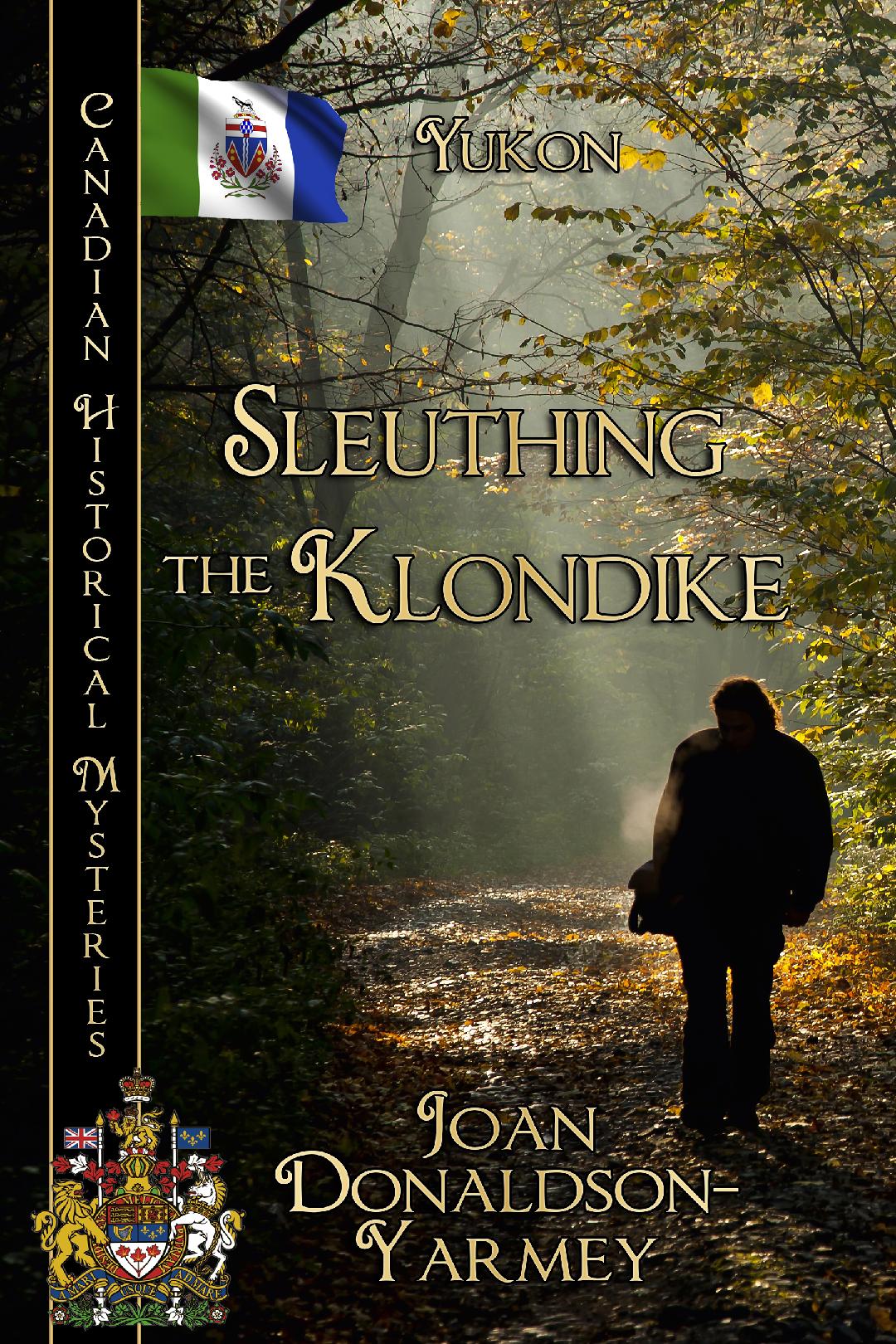
 https://www.amazon.ca/Sleuthing-Klondike-Canadian-Historical-Mysteries-ebook/dp/B0C18F5D72

I am a Canadian and all my mystery, historical, romance, and young adult novels are set in Canada. Canada (like many countries) has national holidays that are sanctioned by the government and are devoted to famous persons or events. There is usually one a month and most workers have the day off to celebrate it. However, it is a little known fact that each day of the year is dedicated to some animal, or food, or activity. None of them is a recognized holiday but they are worth acknowledging. Here are some for the last part of May.

May 19—National Devil’s Food Cake Day. I love chocolate cake so will be going shopping later.

May 20—Pick Strawberries Day.

May 21—National Waiters and Waitresses Day.

May 22—Victoria Day. This is celebrated in Canada to commemorate Queen Victoria, May 24, 1819 – January 22, 1901. She reigned from June 20, 1837 until her death. At 63 years 216 days she was the longest reigning monarch until Queen Elizabeth II who was on the throne from February 6, 1952 until her death in September 8, 2022.

May 23—Lucky Penny Day. Since Canada doesn’t have pennies anymore I think it should be changed to lucky nickel day.

May 24—National Scavenger Hunt Day.

May 25—Towel Day. Not sure what you are supposed to do with the towel.

May 26-- Sally Ride Day

May 27—National Hugging Day

May 28—Hamburger Day. My hubby is going to like that.

May 29—Memorial Day. It is celebrated in the United States to mourn and honour the country’s military personnel who died while serving in the armed forces.

May 30—Water a Flower Day. They will like it in this heat we are having.

May 31--National Macaroon Day.


I have written three books in what I call Joan’s Historical Yukon Novels: Romancing the Klondike (Historical romance), Rushing the Klondike (sequel to Romancing the Klondike), and Sleuthing the Klondike (historical mystery). All are set during the Klondike Gold Rush 1896-1898. Here is the link to my author’s page at BWL Publishing, Inc. to find these books or any of my other mystery, romance, and historical novels.

https://www.bookswelove.com/donaldson-yarmey-joan/

https://www.amazon.ca/Sleuthing-Klondike-Canadian-Historical-Mysteries-ebook/dp/B0C18F5D72


Friday, April 21, 2023

Writing Historical Novels


https://www.bookswelove.com/donaldson-yarmey-joan/

https://books2read.com/Romancing-the-Klondike

https://books2read.com/Rushing-the-Klondike

https://www.bookswelove.com/authors/canadian-historical-mysteries/ 

As a historical writer it is important to make sure that you use the words of the period you have set your book in. For example if your story is set in the 1500s you could use the word hugger-mugger when talking about a sneaky person who is acting in a secretive way and elflocks to describe messy hair. Jargoyles meant that a person was puzzled about something in the 1600s while in the 1700s a person who was out of sorts was grumpish. In the 1800s people would have felt curglaff when they jumped into cold water and a man going for a post dinner walk while smoking his pipe was lunting. In the early 1900s a person who was drunk was referred to as being fuzzled.

Of course, it is important when using those words that the writer somehow explains what they mean such as, if a man said he was going for an after lunch lunt, the person he was talking to could reply. “I don’t have my pipe and tobacco with me today.” I feel that writers who use terminology from a different era or words or phrases from a different language without clarification are trying to impress the reader with their vocabulary and intellect. Speaking as a reader, for me what they are really doing is making me angry and interrupting the flow of the story. I am jolted out of the lives of the characters and into my life as I try to process the meaning of what was written.

As a writer you want the reader to be so caught up in the story that they don’t want to put the book down, you don’t want them to throw the book across the room because they don’t understand what has been said or done.

Another important aspect of writing historical novels or even novels set in past decades is to make sure that you do have the characters using devices that hadn’t been invented yet.

The ball point pen came into use in the 1940’s so you can’t have someone signing papers with it in the 1920s. The Charleston dance was introduced in a movie in 1923 and caught on after that, so a story set before that time could not have party-goers dancing it. While the computer was invented during World War II, it didn’t come into commercial use until the 1950/60s and personal use until the 1970/80s. Don’t have a person make a phone call before March 7, 1876, which is when Alexander Graham Bell patented his telephone and don’t have someone send a text on a mobile phone in the 1970s.

It is important to do your research when writing a novel set in the past, no matter what the year.

More historical words:

In the 1590s beef-witted described something as being brainless or stupid.

In the 1640s callipygian described a beautifully shaped butt.

In the 1650s sluberdegullion meant an unkempt, drooling person.

In the 1950s two people making out in the back seat of a car were doing the back seat bingo.

Sunday, March 5, 2023

Sable Island


 https://www.amazon.ca/Killer-Match-Joan-Donaldson-Yarmey/dp/1990086241

https://www.facebook.com/writingsbyJoan

Sable Island

I am a Canadian writer and all my mystery, historical, romance, and young adult novels are set in Canada. According to Statistics Canada, Canada has 52,455 islands and ranks fourth in the world for number of island. However, it is a long ways behind Sweden that has 267,570 islands, Norway with its 239,057 islands, and Finland with 178,947.

Canada has three of the top ten largest islands in the world and all are in the northern territory of Nunavut. Baffin is Canada’s largest island at 507,451 sq km (195,928 sq mi) and the world’s fifth largest. Victoria comes in second in Canada at 217,291 sq km (83,897 sq mi) It is the world’s eighth largest. Ellesmere is third in Canada and tenth in the world at 196,236 sq km (75,767 sq mi). It is slightly smaller than Great Britain.

Canada also has the world’s largest fresh water island. Manitoulin Island is located within the boundaries of the province of Ontario on Lake Huron, one of the Five Great Lakes. The island is so large that it has over one hundred lakes on it.

One of the most famous Canadian islands is the crescent-shaped Sable Island, off the southeast coast of the province of Nova Scotia. It is believed to have been discovered by Portuguese explorer Joao Alvares Fagundes in 1520-1521. In 1598 a French nobleman, Troilus de la Roche de Mesgouz, tried to colonize the new world with convicts but they mutinied and, in punishment were put on the tree-less, stone-less Sable Island. A few managed to survive in mud huts until 1603, when they were returned to France.

Sable Island has over 350 bird species and 190 different plants but it is best known for its feral horses. The ancestors of the present day horses were ceased by the British from the Acadians, who were a French-speaking group who settled in the New France colony of Arcadia. They were expelled between 1755 and 1764 after the English took over the colony. Their horses were purchased and some were taken to Sable Island in 1760 for grazing.

The Sable Island horses number between 400 and 550 and due to limited food supply on the island are small and stocky in stature. Although, in the past, some of them were rounded up and taken to Nova Scotia for sale, today they are unmanaged and left to live their lives as wild animals.

In 2008 the Sable Island Horse became the official horse of Nova Scotia and in 2011, the Sable Island National park reserve was created to protect the horses and the island.